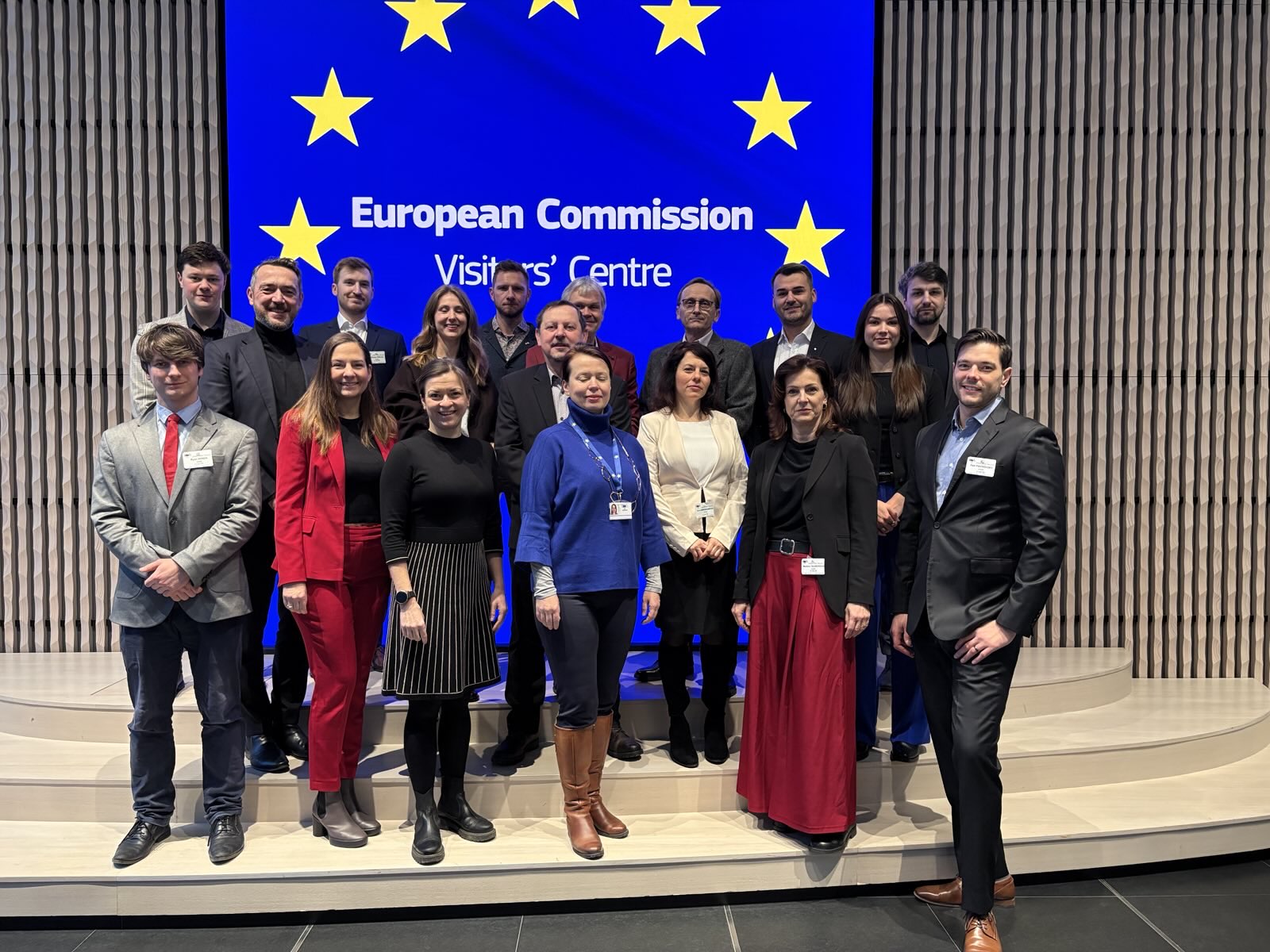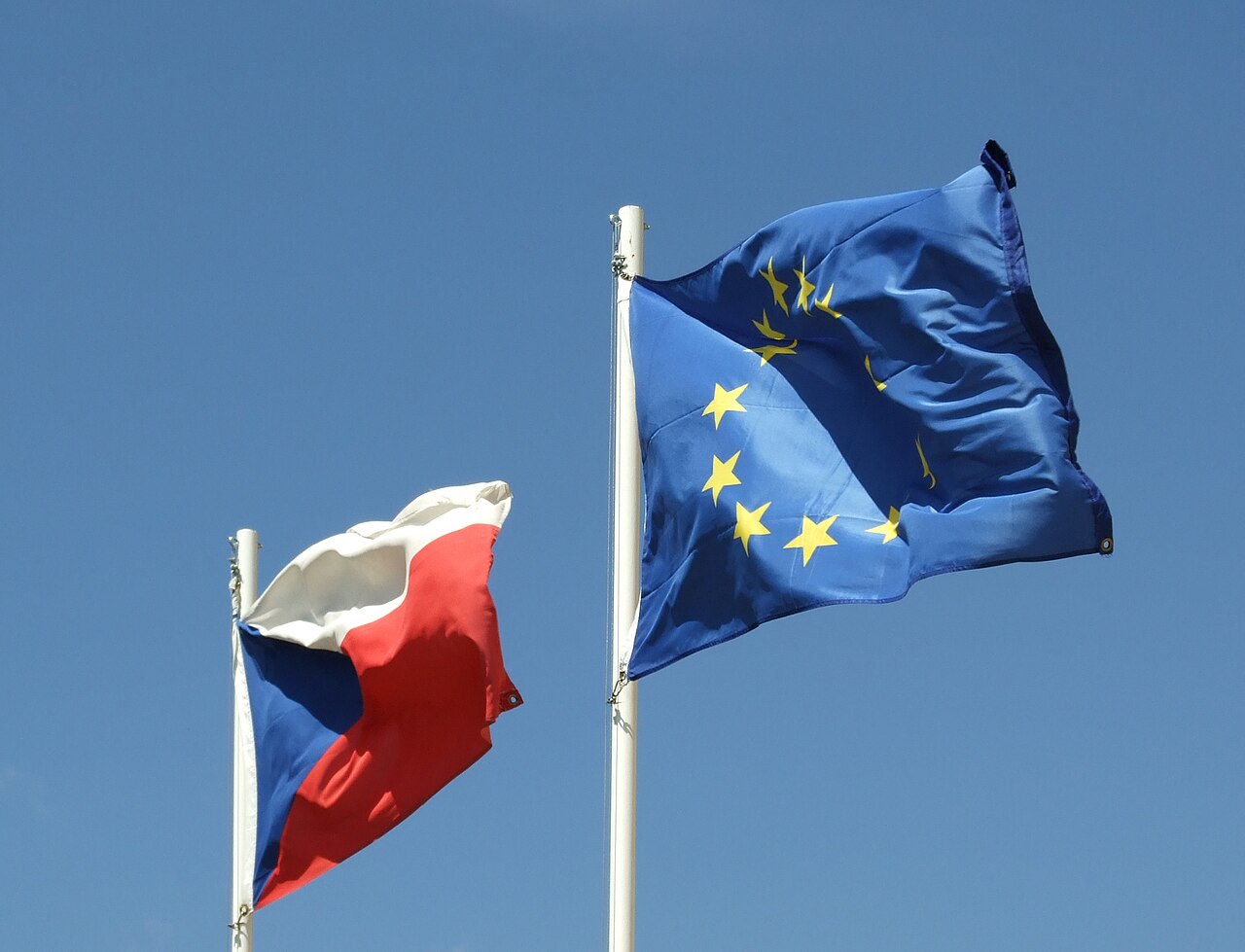
This year, the Czech Republic commemorates twenty-two years since its accession to the European Union, one of the most significant moments in the modern history of the country. The Czech Republic became a member as part of the largest enlargement in the Union’s history, when ten new states joined. Today, security and defence are becoming central themes in Europe and among the EU’s key priorities, given the significantly deteriorated security environment, at a time when the commitments of the United States appear less reliable than at any point since the founding of NATO. This article recalls several aspects of the EU’s development and their interconnections, with particular emphasis on ensuring security and defence.
The European Union is founded on two treaties: the Treaty on European Union and the Treaty on the Functioning of the European Union. The EU’s fundamental objectives include promoting peace, security, its values, and the well-being of its citizens. EU citizens are guaranteed the free movement of persons and an area of freedom, security, and justice without internal borders. The Union strives for the sustainable development of Europe, based on economic growth, a competitive market economy, and environmental protection. The EU also supports scientific and technological progress, economic, social, and territorial cohesion, and solidarity among Member States. In practice, the EU maintains an economic and monetary union with a single currency, the euro. Furthermore, the EU seeks to contribute to the sustainable development of the planet, the eradication of poverty, the protection of human rights, and the development of international law.
Over the course of its existence, the EU has expanded seven times to its current total of 27 Member States. The first enlargement took place in 1973, and the most recent in 2013 with the accession of Croatia. No criteria were set for the first enlargement; this changed with the accession of Central and Eastern European countries. In June 1993, the European Council established the so-called Copenhagen Criteria, defining the general binding conditions for EU membership. These comprised political criteria, economic criteria, and the criterion of acceptance of the acquis communautaire.
The Czech Republic submitted its application for EU membership on 17 January 1996. Membership in European integration structures was one of the priority objectives of Czech foreign policy. Accession to the EU required not only the fulfilment of the Copenhagen Criteria but also entailed significant political and economic impacts on the Czech Republic. One of the key requirements was the gradual implementation of the acquis communautaire into the Czech legal system.
In 2007, the Czech Republic became part of the Schengen Area, which led to the removal of internal borders and significantly expanded freedom of travel.
During its membership, the Czech Republic successfully held the Presidency of the EU in 2009 and 2022, demonstrating its capacity as an effective negotiator in crisis situations, particularly during the war in Ukraine and the energy crisis.
According to the currently valid Security Strategy of the Czech Republic, national security is linked to active participation in NATO’s collective defence system, based on a strong transatlantic bond, as well as to the development of all areas of the EU’s Common Security and Defence Policy (CSDP). From the perspective of security and defence, Czech involvement in the CSDP is therefore essential. The CSDP provides a framework through which the Union and its Member States coordinate their actions to protect the independence and territorial integrity of EU countries, ensure peace and security, develop and strengthen democracy, and support respect for human rights and fundamental freedoms.
The EU’s CSDP is an integral part of the Common Foreign and Security Policy (CFSP), through which Member States contribute to ensuring security and defence, resolving conflicts and crises, protecting EU citizens, and strengthening international peace and security. The fulfilment of these tasks is based on capabilities provided by the Member States. Crisis management within the EU is also part of the CFSP and aims to strengthen security and stability in Europe. The concept of crisis management corresponds to NATO’s crisis management concept, with NATO remaining the cornerstone of collective defence for EU members.
Similarly to NATO, EU Member States are committed under the CSDP to assist one another in the event of armed aggression, based on the collective defence clause enshrined in the Treaty on European Union:
“If a Member State is the victim of armed aggression on its territory, the other Member States shall have towards it an obligation of aid and assistance by all the means in their power, in accordance with Article 51 of the Charter of the United Nations. This shall not prejudice the specific character of the security and defence policy of certain Member States” (Treaty on European Union, Article 42(7)).
The Treaty on European Union thus stipulates that if an EU Member State is subject to armed attack on its territory, other Member States shall provide assistance and support. However, it must be noted that the overall nature of the EU’s CSDP does not imply the same level of collective defence obligation as Article 5 of the Washington Treaty. For most NATO and EU members, the principle of collective defence within the Alliance therefore currently prevails. Discussions are ongoing regarding a more precise formulation of this provision.
In line with the CSDP, the EU conducts external operations and missions, which, depending on their nature, are civilian, military, or police-based, although crisis management in many cases requires a combination of these elements. External missions and operations are an important instrument for ensuring the EU’s own security and represent a significant contribution to stability in its neighbourhood and in crisis regions.
For a long time, the EU played only a complementary role in defence. European security after World War II was primarily based on NATO and cooperation between European states and the United States. European institutions focused mainly on economic integration, the single market, and monetary union.
In 2004, the European Defence Agency (EDA) was established to develop and enhance military capabilities, focusing on defence capability development, research, procurement, and armaments. The EDA identifies operational needs, supports measures to meet them, contributes to strengthening the technological and industrial base of defence, helps define European capability and armaments policy, and supports the assessment of improvements in EU military capabilities.
After 2014, the situation began to change, and following the escalation of security tensions in Europe, the EU started to develop its own defence instruments. One of the first steps was the establishment of the European Defence Fund, which finances joint research and development of military technologies. Further steps included programmes for joint procurement of ammunition and military equipment to strengthen the European defence industry and improve cooperation among national armed forces. In connection with the conflict in Ukraine, the EU has also been developing closer ties with Ukraine by supporting defence industry initiatives and cooperation between the EU and Ukrainian defence industries, including financial assistance.
A persistent weakness of the EU remains its dependence on external powers, not only in security but also in raw materials. For three decades, the political and economic model relied on companies prioritising shareholder returns over national security. Since the 1990s, a phase of peak globalisation emerged, characterised by global supply chains that enabled production to shift to low-cost countries and sales on global markets. While much of the world’s population benefited from this model, the world is now moving from globalisation towards the “geopoliticisation” of the economy. Economic decisions are no longer primarily driven by market efficiency but by security and strategic interests. The EU should therefore focus on increasing strategic autonomy and strengthening supply chain resilience.
EU–NATO cooperation began at the start of the new millennium and led to the creation of a wide range of tools aimed at enhancing security for citizens in Europe and beyond. In a joint declaration signed in July 2018, the EU and NATO outlined a shared vision for addressing common security threats. This vision is being gradually implemented, and EU–NATO relations continue to develop accordingly.
It is no coincidence that the debate on a so-called European pillar of NATO has been revived. This concept first emerged in the 1990s, when the end of the Cold War raised questions about reduced US military presence in Europe. At the same time, security challenges—particularly conflicts in the Balkans—demonstrated that Europe continued to require a functional and credible military framework, which NATO provided.
Today, the reactivation of the European pillar has become a de facto necessity and will largely depend on US willingness to allow the use of collective Alliance capabilities for operations without direct American involvement. In any case, consolidating the transatlantic bond requires a more European NATO, including debate on a so-called European nuclear umbrella, which will also influence the future of US forces stationed in Europe. However, the transition towards greater European autonomy is complicated by the fact that NATO’s functioning has long relied on US-provided capabilities, from logistics and intelligence to supreme military command.
The ongoing conflict in Ukraine has revealed shortcomings in the EU’s defence and security arrangements. The EU should enhance the real combat capabilities of European armed forces, incorporating innovations and lessons from the Ukrainian battlefield, particularly regarding autonomous systems and air and missile defence. At the same time, industrial production must be increased across almost all key segments of the defence industry. The EU’s future objective must be to assume greater responsibility for its own security. The European defence industry must also innovate more rapidly, combining breakthrough technologies such as artificial intelligence, quantum technologies, robotics, and cyber capabilities.
Current EU policy therefore focuses on immediate strengthening of military readiness and industrial capacities. Examples include the ReARM Europe Plan / Readiness 2030 from March 2025, accompanied by a roadmap identifying key priorities such as air and missile defence, drones, and artillery systems. The plan allows Member States to significantly increase defence spending. The EU Council activated an “escape clause,” allowing 17 states, including the Czech Republic, more flexible budget rules for defence investments of up to 1.5% of GDP above standard limits. New PESCO projects have also been launched, focusing on quantum systems, directed-energy weapons, and navigation systems for ground forces.
In March 2026, the AGILE programme was launched with a budget of EUR 115 million to support rapid defence innovation, financing breakthrough defence technologies from European startups and small and medium-sized enterprises. The ReARM plan also includes the SAFE European financial instrument, providing loans for military equipment aimed at modernising armed forces, with a total volume of approximately EUR 150 billion. In April 2026, the EU Council approved the Czech plan for using these funds, allowing the Czech Republic to draw EUR 2.06 billion (CZK 50.3 billion) for strategic security-related projects.
Financing defence through joint European borrowing represents more than an economic instrument, as it also creates a new type of political relationship between Member States and European institutions. Over time, a network of jointly coordinated defence projects at the European level may emerge.
The conflict in Ukraine clearly demonstrates that state defence cannot be reduced solely to armed forces but must have a broader societal dimension. In addition to material resources, human resources are of critical importance, representing a key limiting factor in building and sustaining armed forces.
To secure the future of industry in Europe over the next two to three decades, education systems must change significantly. Engineering and design activities require not only technical thinking but also creativity grounded in mathematical and physical principles. This implies greater academic demands and a renewed emphasis on technical and natural sciences, including their meaningful integration.
These challenges are even greater in the defence industry, which is subject to stricter requirements.
The Czech Republic possesses a single set of forces and capabilities; thus, any strengthening of Czech defence has a pan-European impact. This is underscored by the fact that 23 EU Member States are also NATO members. Strengthening defence may also involve smaller, functional regional partnerships, for example with Slovakia or within Central Europe (V4+). Some answers may be provided by forthcoming strategic documents, including the Long-Term Defence Outlook and the Concept for the Development of the Armed Forces of the Czech Republic 2040.
The Czech Republic can contribute to strengthening the EU militarily, which also represents an opportunity and challenge for its defence industry. Relative to its size, population, and economic strength, the Czech Republic has a highly capable arms industry. Future development should proceed pragmatically, with an emphasis on efficiency and long-term relevance.
In conclusion, building a robust, capable, and integrated European defence industrial base must not remain a mere aspiration but is an absolute prerequisite for credible deterrence and defence.
Author: Ing. Antonín Novotný, Ph.D.