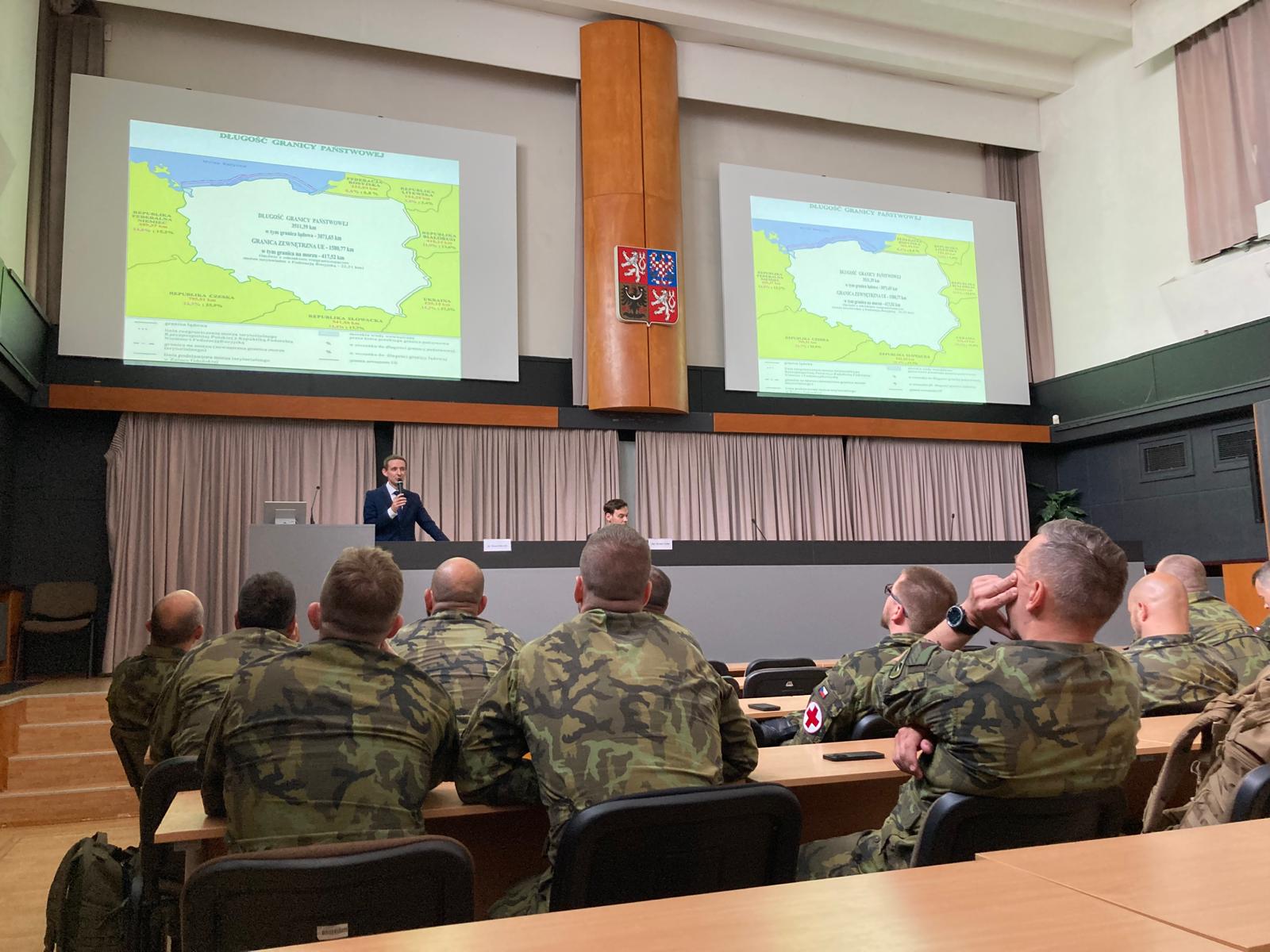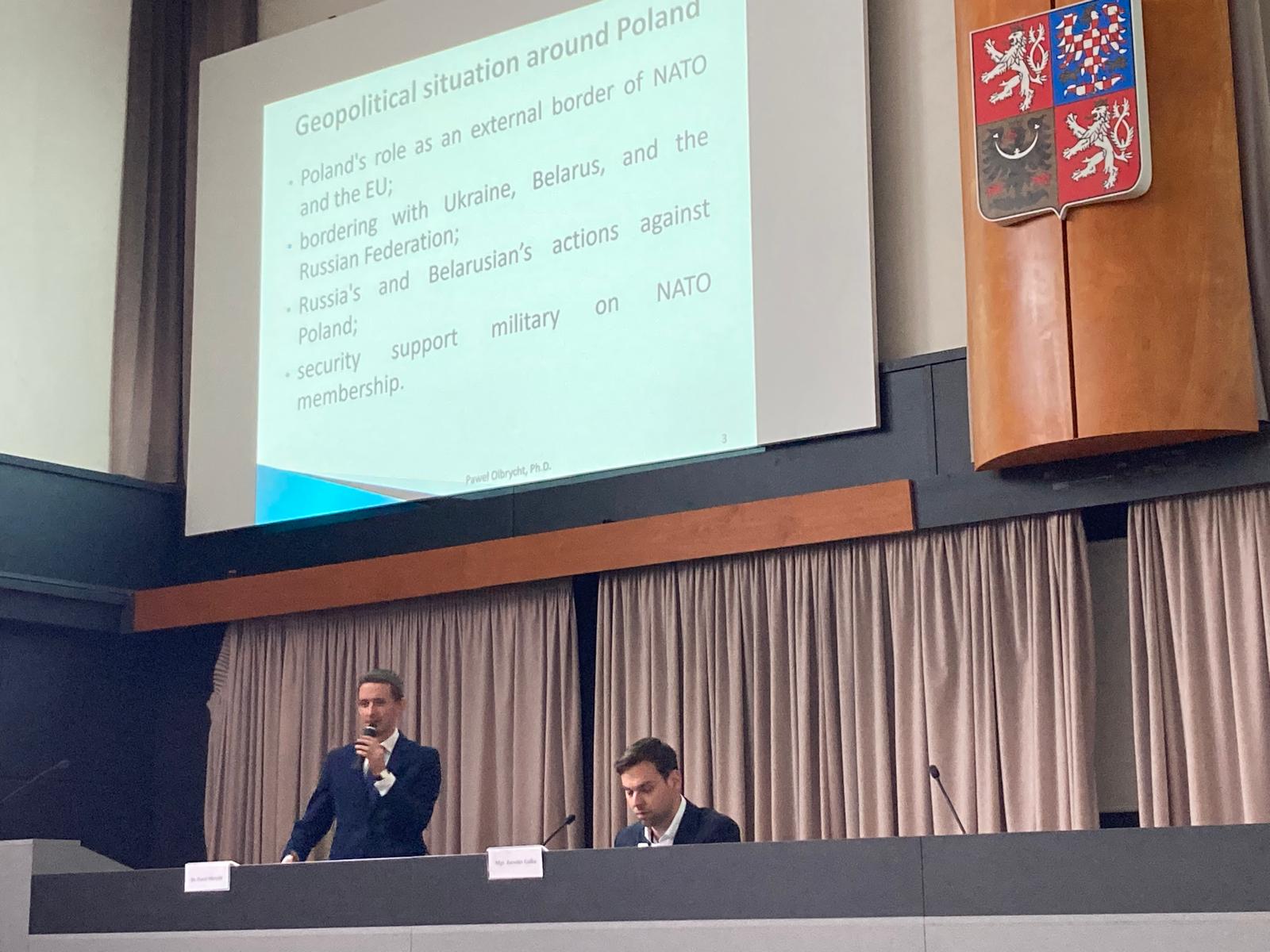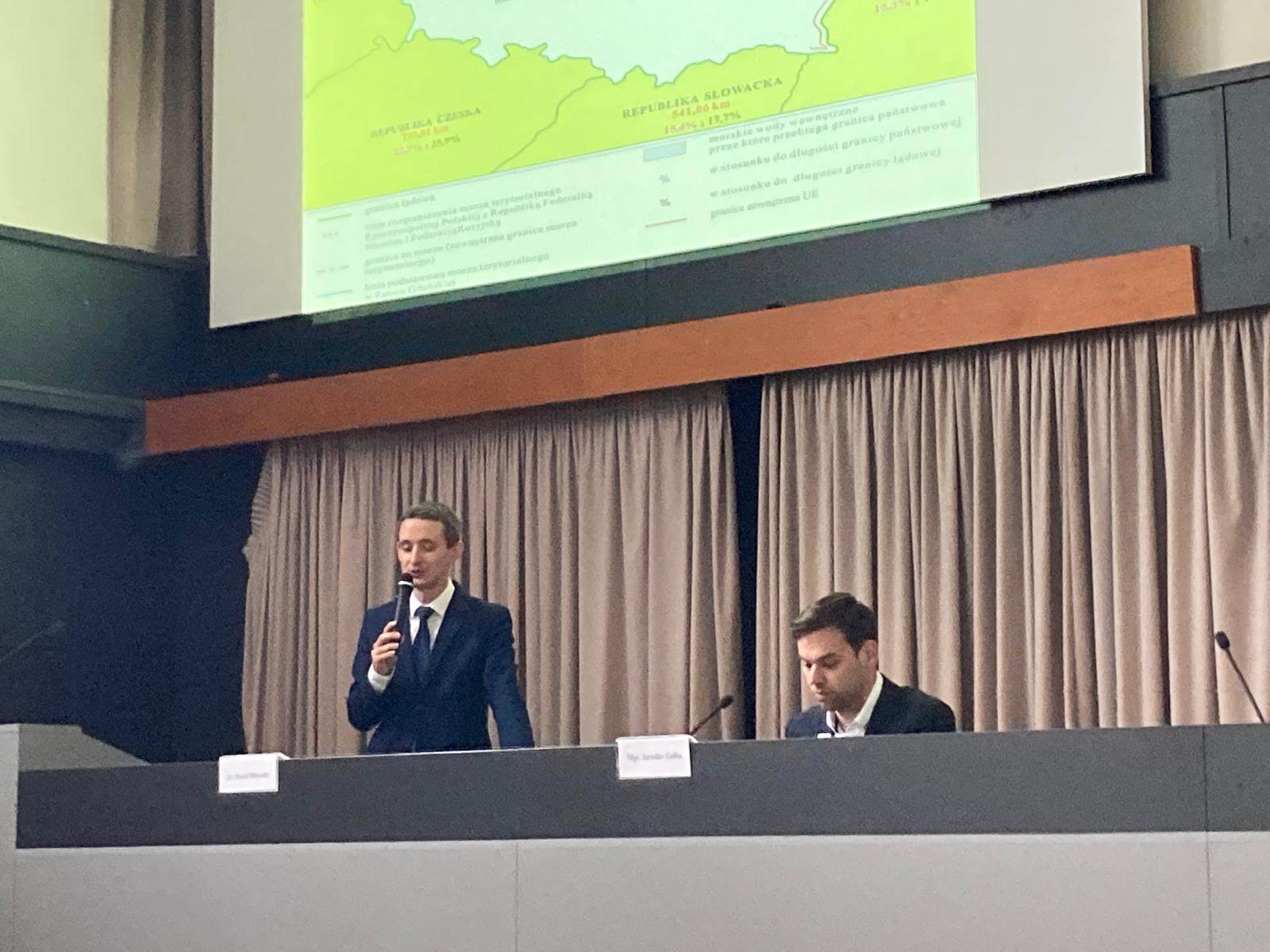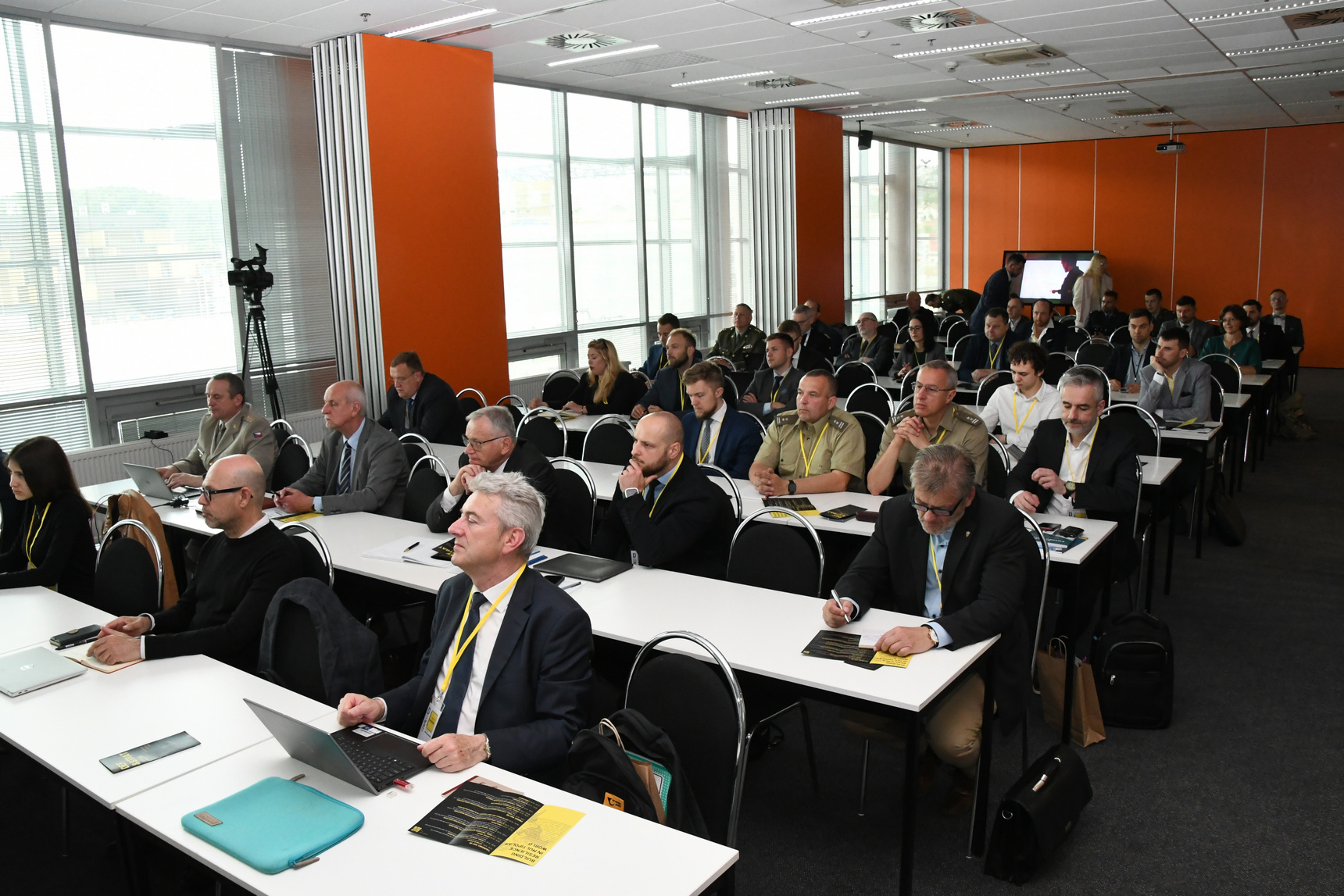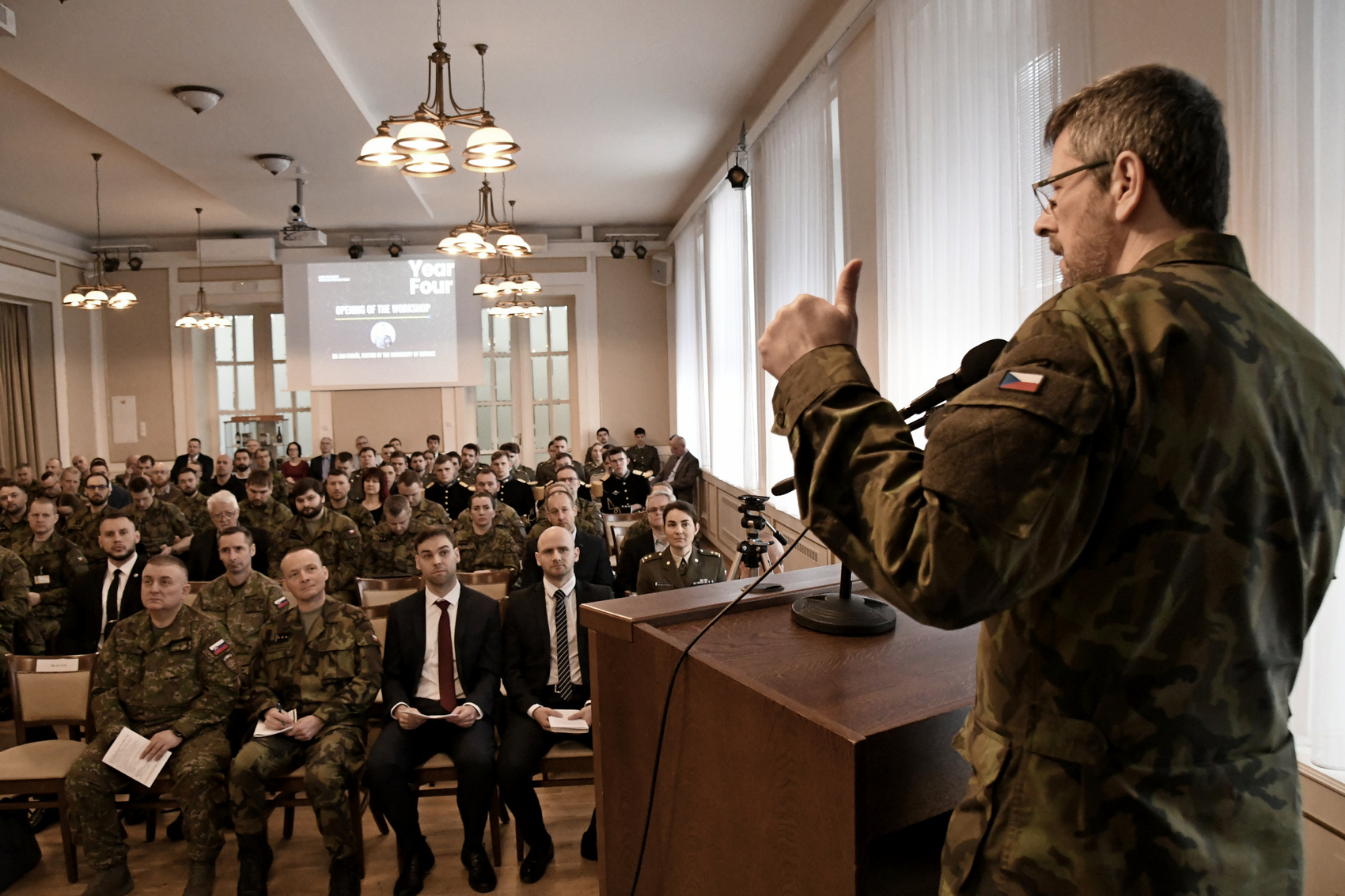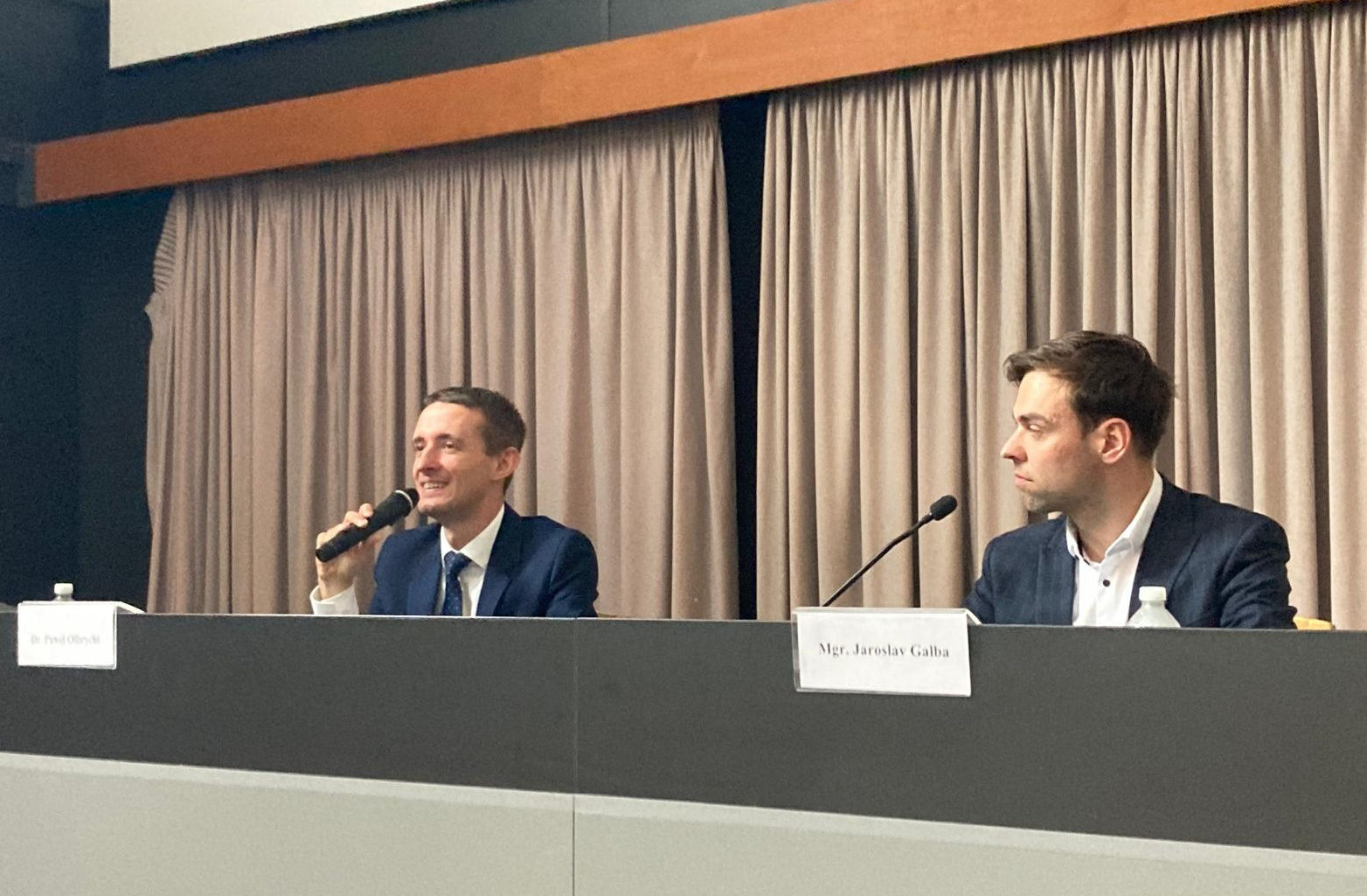
On Wednesday, 13 May 2026, at 2:00 PM, a lecture was held by Dr. Paweł Olbrycht from the General Tadeusz Kościuszko Military University of Land Forces in Wrocław, Poland. Dr. Olbrycht is currently on a study visit at the Centre for Security and Military Strategic Studies of the University of Defence, which is the result of a recent inter-university agreement on cooperation.
In his lecture, Dr. Olbrycht presented Poland’s position on the conflict in Ukraine, which has been taking place in its immediate neighborhood for five years now. During this challenging period, Poland has faced immediate security threats, ranging from airspace violations to sabotage of critical, especially energy, infrastructure. Warsaw responded to these challenges with an unprecedented modernization of the military. Polish defense spending gradually increased from the original 2.2% of GDP in 2020 to a record 4.7% of GDP in 2025; in the future, the number of members of the Polish Armed Forces should be doubled from the current state, i.e., up to 300,000 soldiers. Parallel to this process of increasing military capacities, Poland successfully completed the process of completely disconnecting from Russian energy resources.
In addition to the conventional military threat, Poland had to deal with intensive hybrid activities. This included not only disinformation and cyberattacks but also constant migration pressure on the borders with Belarus, which was used as a tool to destabilize the country. In contrast, Poland approached the refugee wave from Ukraine with extraordinary solidarity. In total, it provided temporary protection to more than 2 million people, who have successfully integrated into the labor market and the education system.
Polish military support for Ukraine, currently exceeding the value of 18 billion zlotys, is seen not only as aid to a neighbor but as an investment in its own security and a form of prevention against aggressive Russian policy. The lecturer also mentioned opportunities that may arise for Polish companies and foreign trade after the end of the conflict.
After the lecture, space was dedicated to questions and comments from the audience, which consisted of both participants of the Senior Officers Course and students and academic staff of the school. The lecture and discussion were met with great interest and a positive response.
Author: PhDr. Libor Frank, Ph.D.