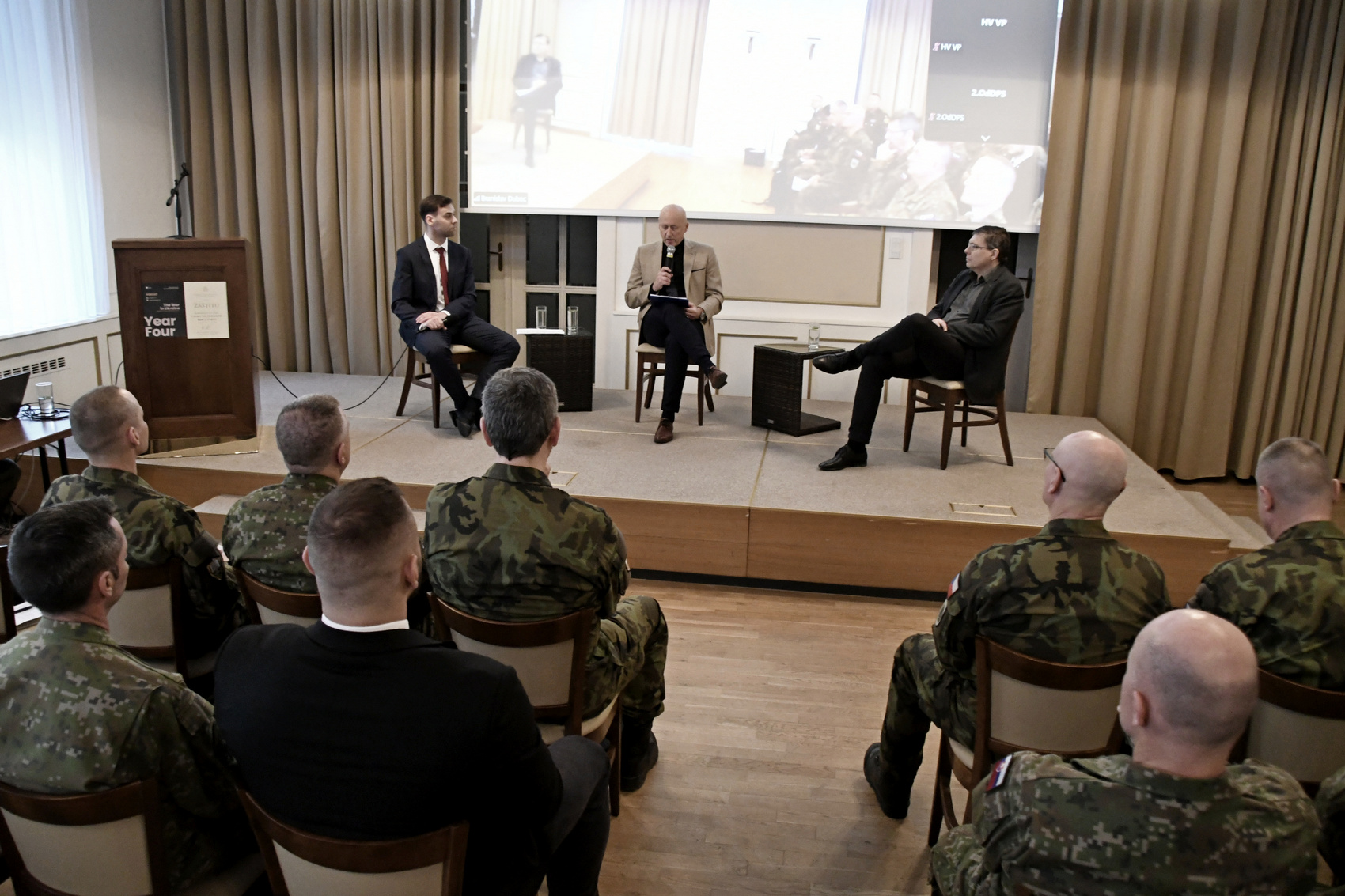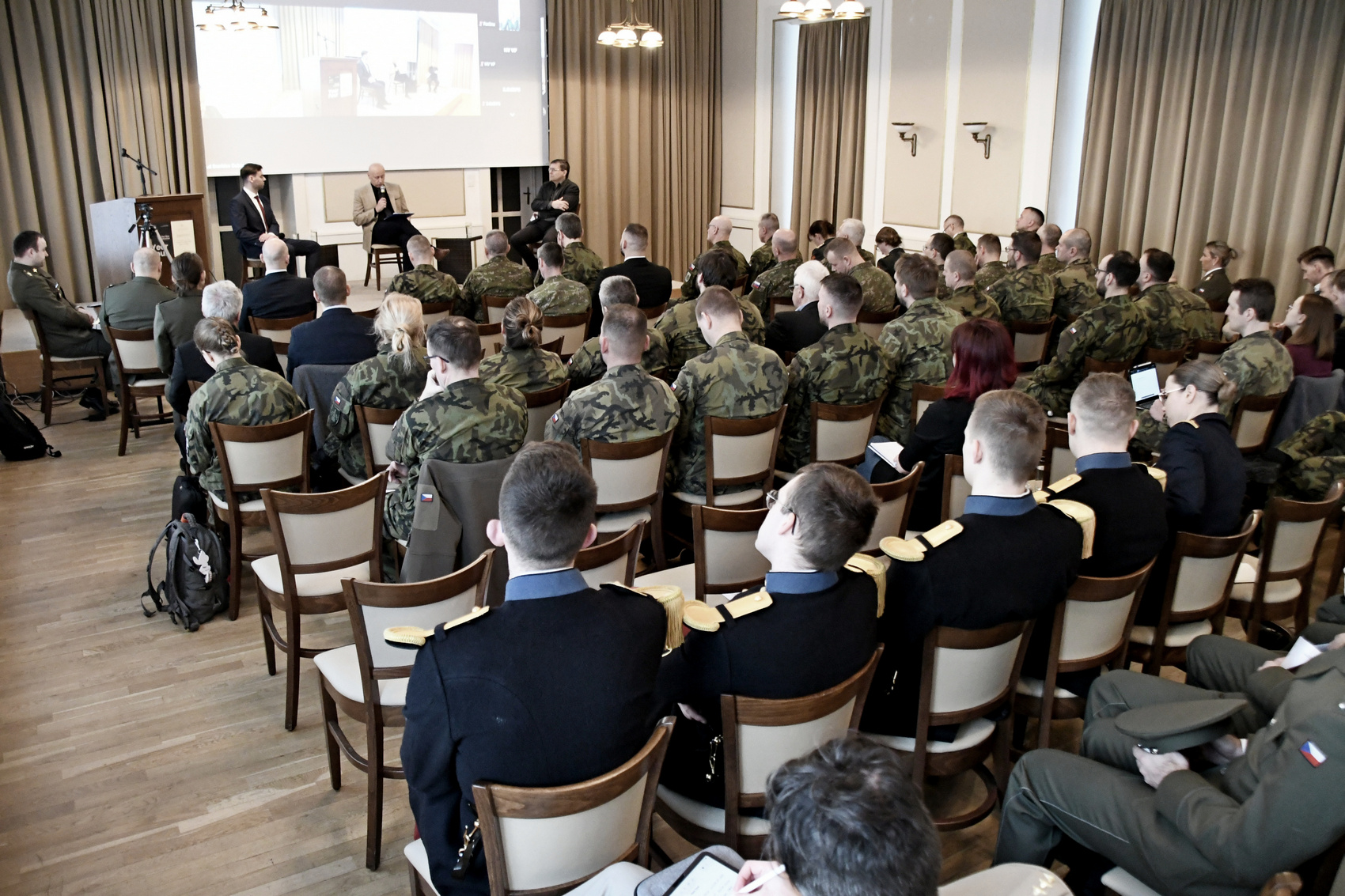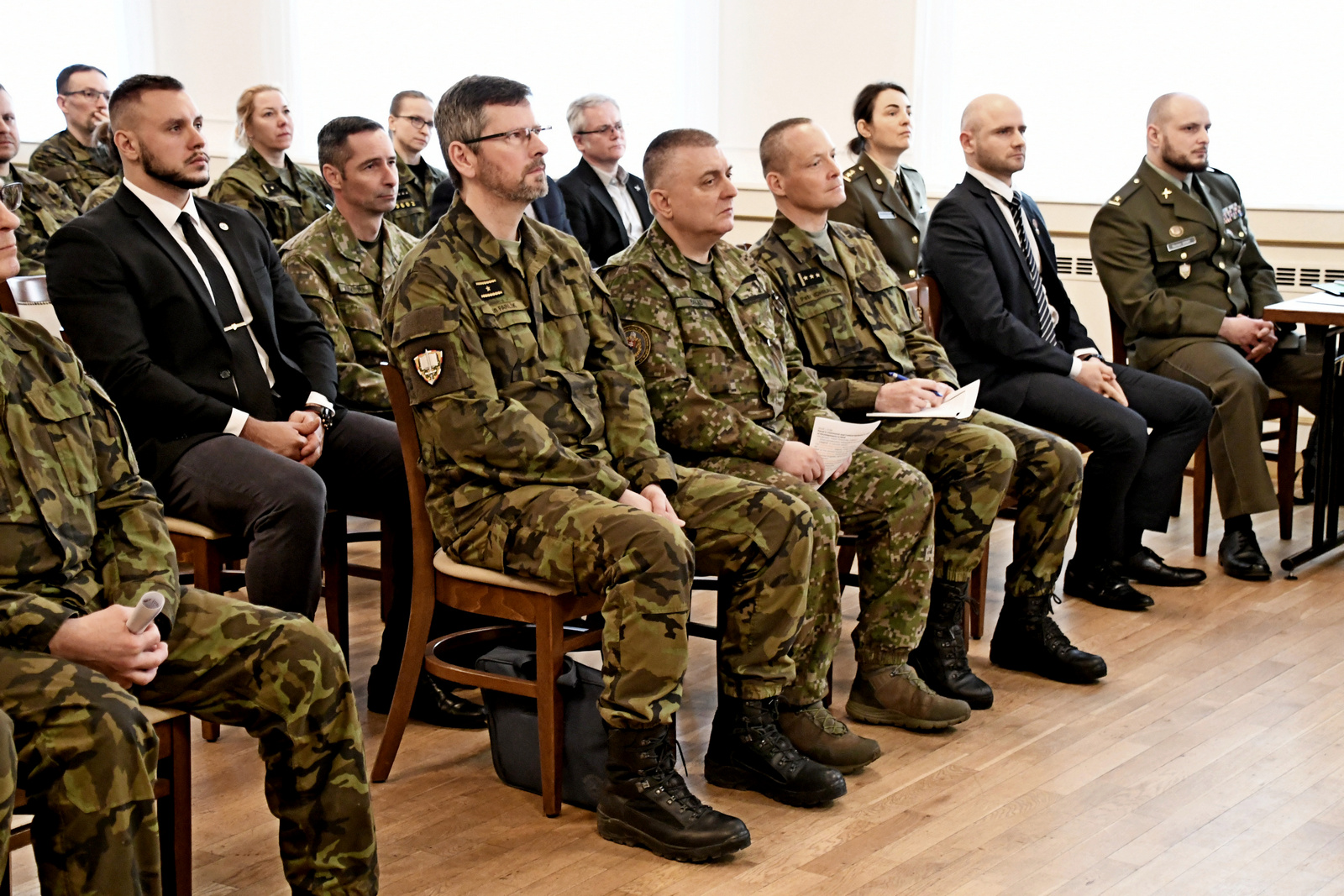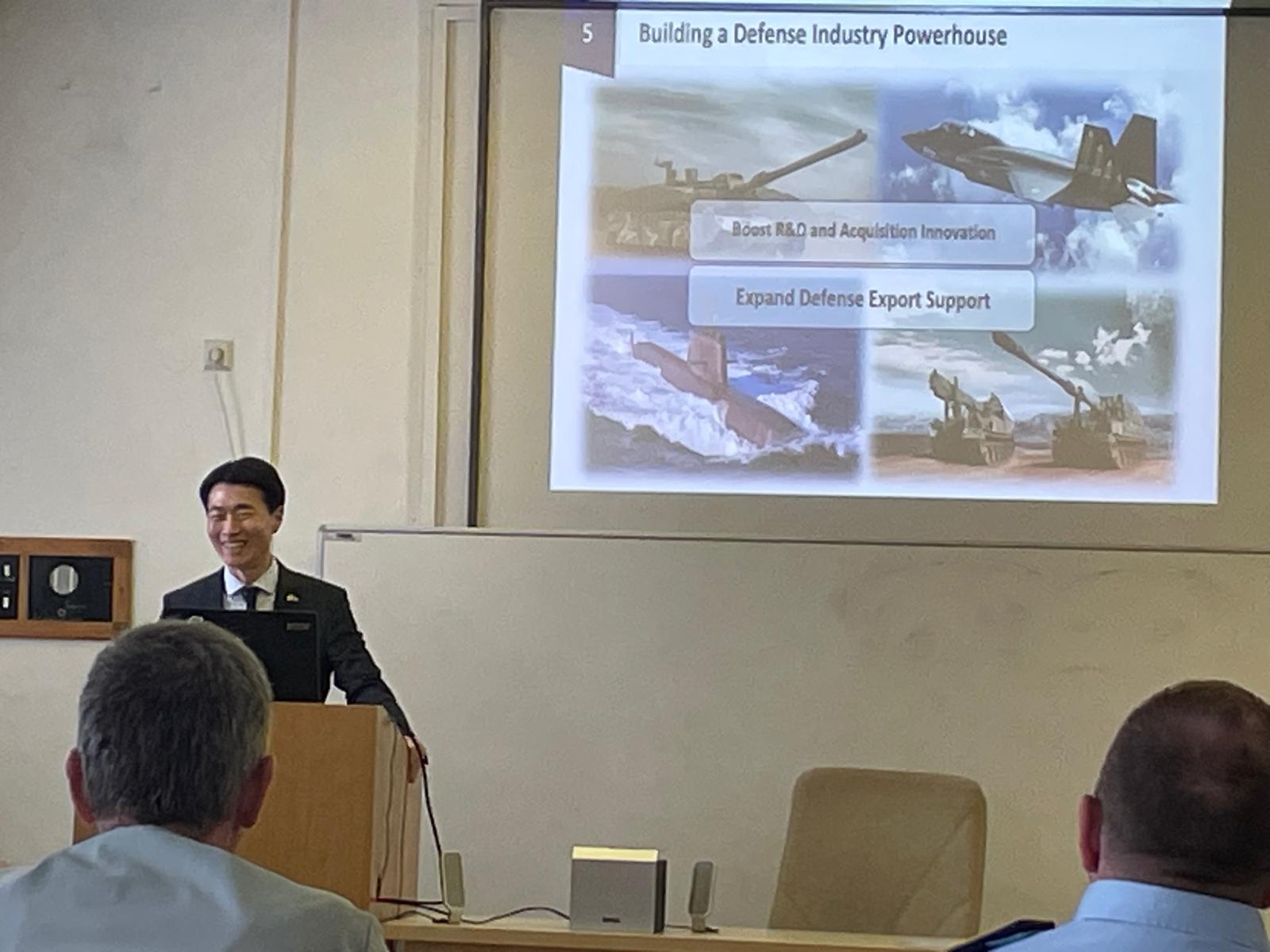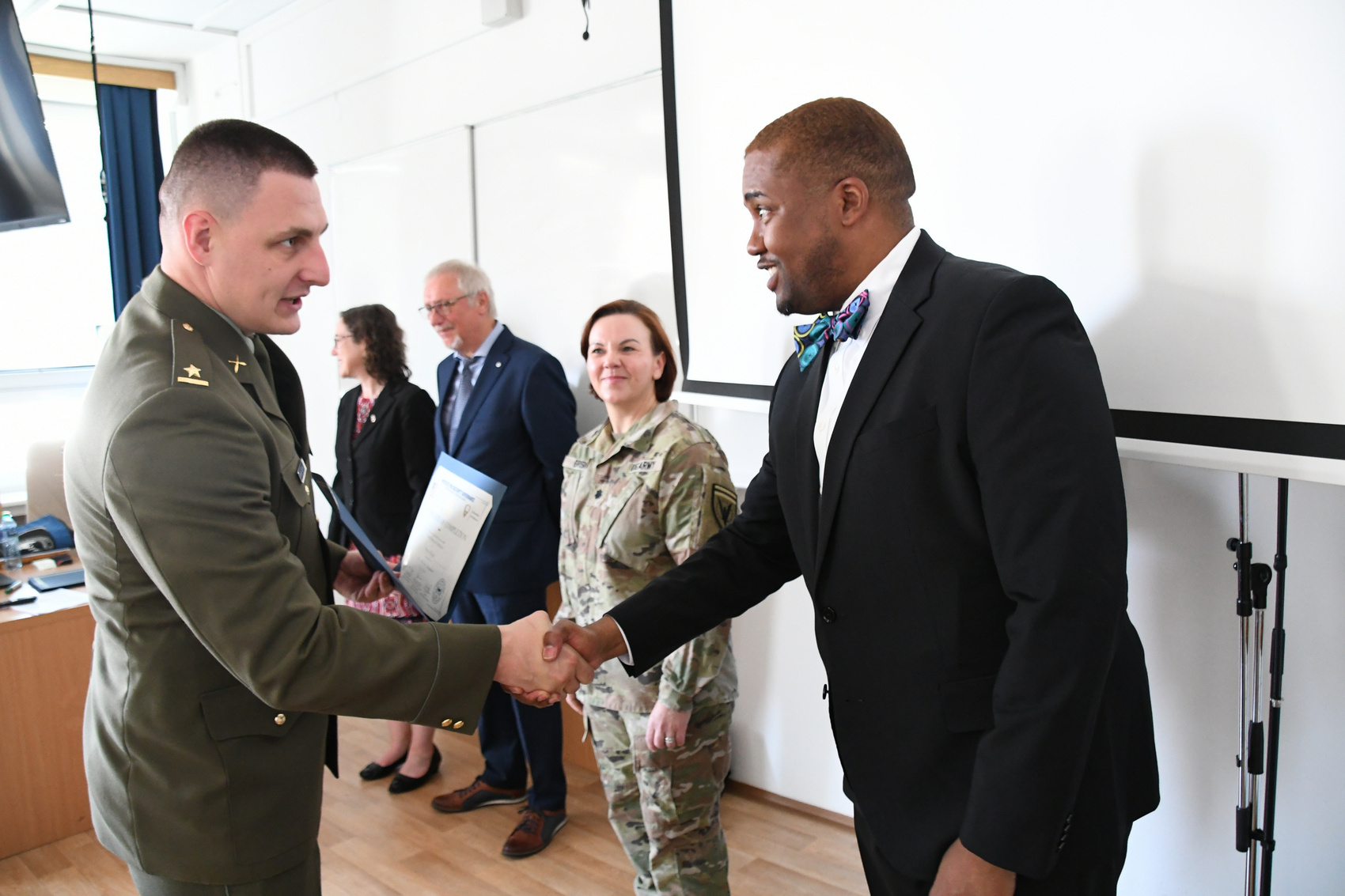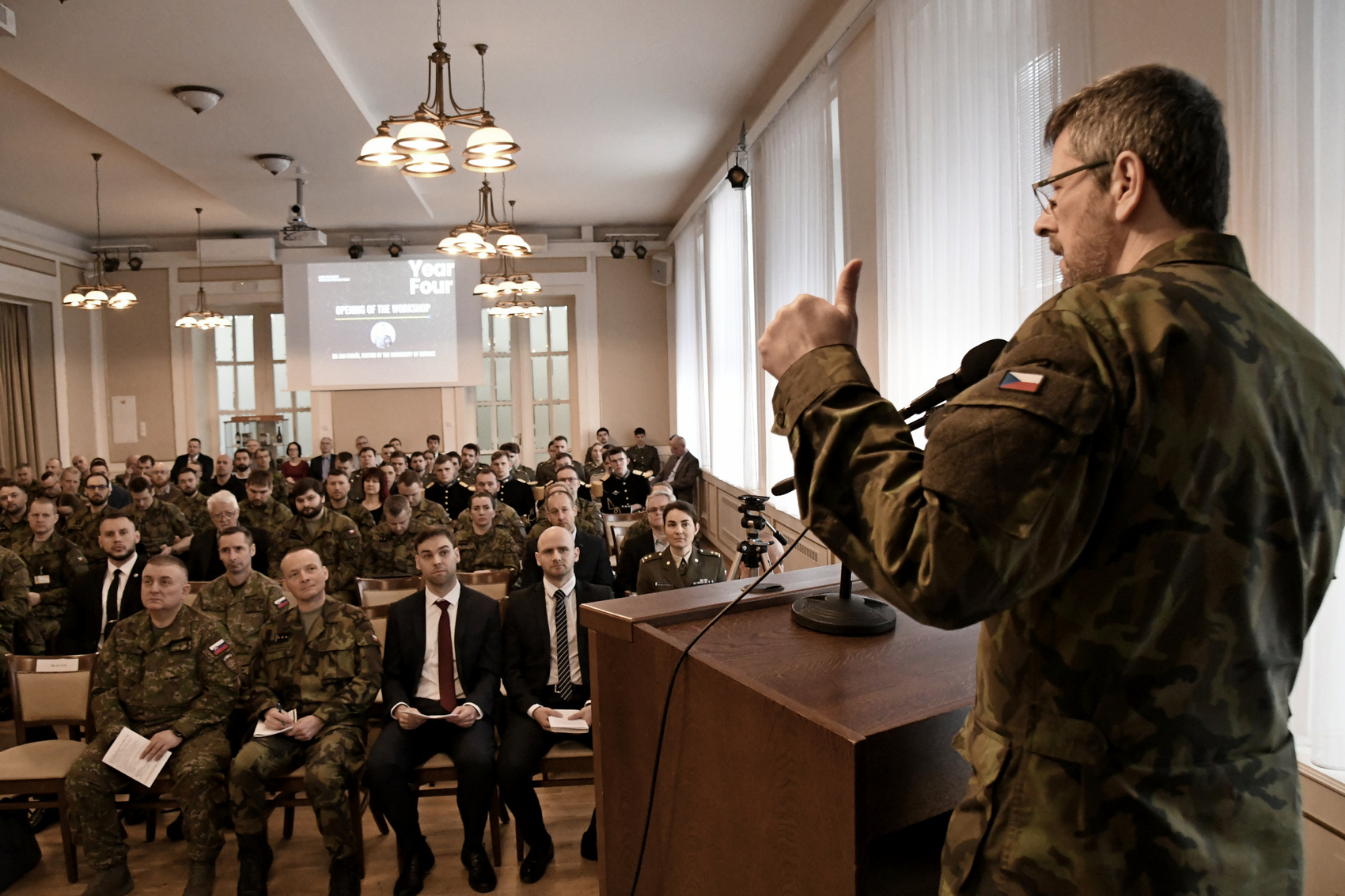
On Thursday, 26 February, the Centre for Security and Military Strategic Studies of the University of Defence (CSMSS) held a workshop dedicated to the fourth year of the war in Ukraine. The event was opened by the Rector-Commander of the University of Defence, Brigadier General Jan Farlík, who described the conflict as the most serious in Europe since the Second World War. He emphasised that the war concerns not only the survival of Ukraine, but also the security of Europe as a whole. He recalled historical parallels and stressed the need for long-term solidarity as well as the ability to defend one’s own security.
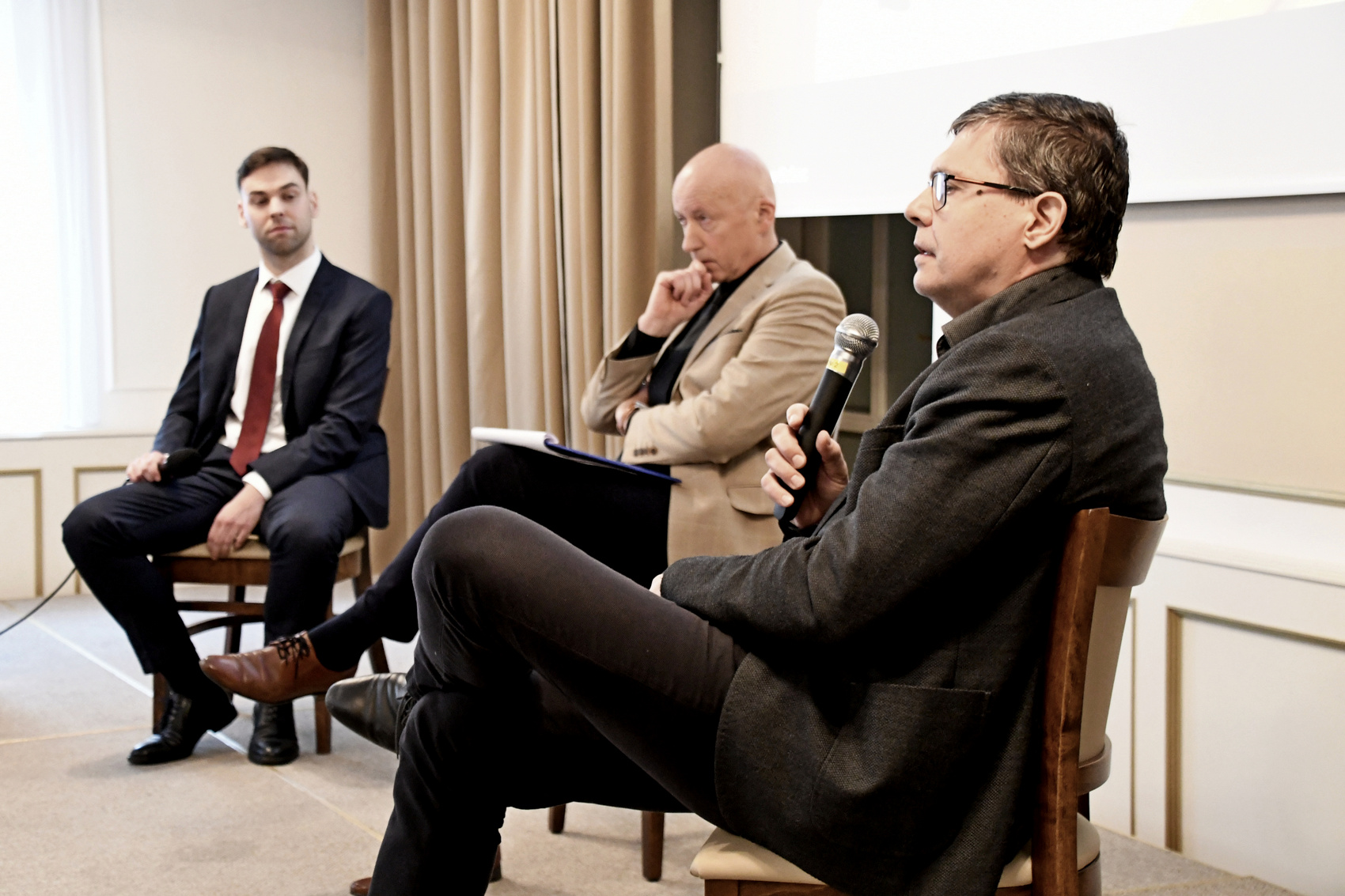
The first panel, focused on the civil and military aspects of the conflict, featured Zdeněk Petráš from CBVSS, Pavlína Rehor from the European External Action Service, and Professor Jan Holzer from Masaryk University.
Zdeněk Petráš addressed the key role of external actors, particularly NATO and the EU. Central issues in this context include the establishment of security guarantees and the Coalition of the Willing’s initiative to launch a peace operation involving multinational forces. The objective is to ensure Ukraine can effectively address security threats in the post-war order. To achieve this, Ukraine will need to build, within a stable political environment, armed forces with the necessary military capabilities and adequate technological advancements. In this regard, the role of the West remains indispensable.
Pavlína Rehor outlined the scale of support provided by the European Union. According to her, the EU has provided approximately €200 billion in financial, humanitarian, and military assistance, including support to Member States hosting refugees and the delivery of military equipment. She stressed that, for the first time in its history, the EU financed military assistance to a country at war immediately after it was attacked. A significant shift in approach is also evident: Ukraine is increasingly involved in joint defence projects and cooperation with the European defence industry. EU support is twofold: strengthening Ukraine while simultaneously exerting pressure on Russia through sanctions and countering hybrid threats.
Jan Holzer focused on developments in Russia. He emphasised the need to understand the nature of Russian society and described the shift from the initial depoliticisation of the conflict in 2022 to the gradual mobilisation of society. According to him, Russian elites act more ideologically than purely rationally. For Western countries, it is therefore crucial to understand how the war is perceived in Russia, rather than viewing Russian society through the prism of their own assumptions.
The panel participants agreed that the war has accelerated the transformation of European security policy, strengthened cooperation between the EU and NATO, and reaffirmed the importance of protecting critical infrastructure and societal resilience.
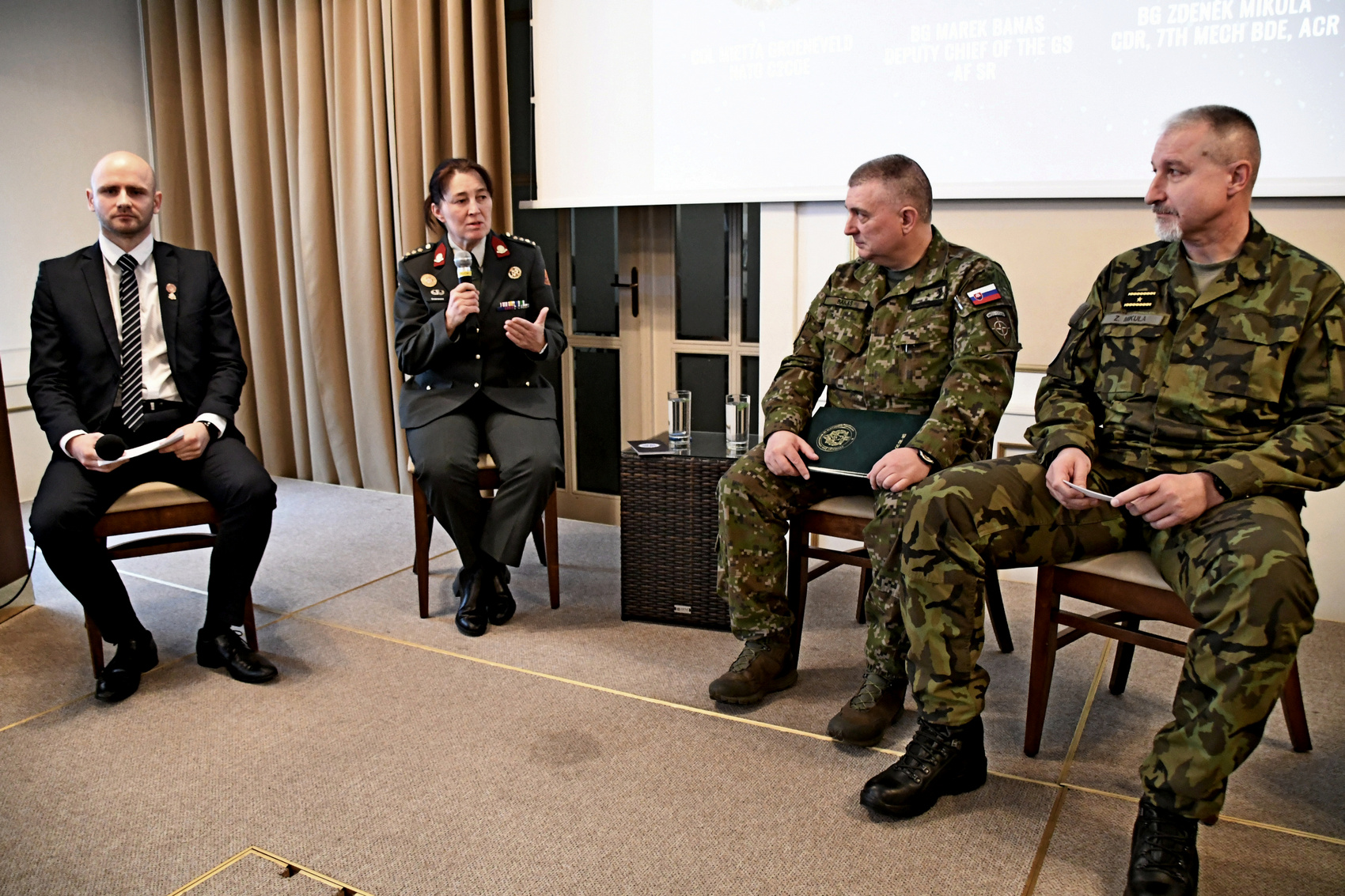
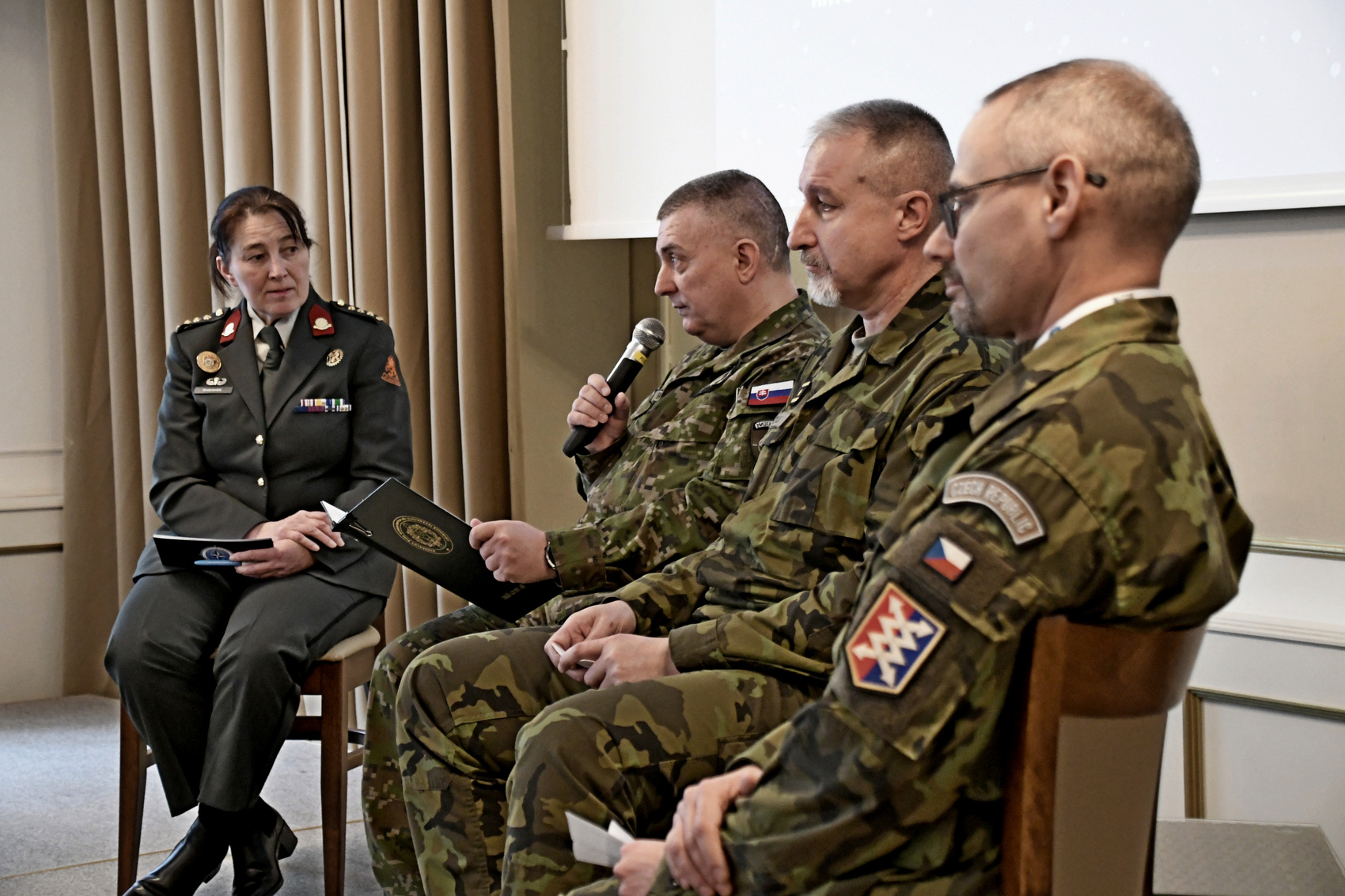
The second part of the workshop focused on the development of Command and Control (C2) systems during 2025. The discussion featured Colonel Mietta Groeneveld, Director of the NATO Command and Control Centre of Excellence; Brigadier General Marek Banas, Deputy Chief of the General Staff – Chief of Staff of the Armed Forces of the Slovak Republic; Brigadier General Zdeněk Mikula, Commander of the 7th Mechanized Brigade of the Czech Armed Forces; and Colonel Martin Hlaváček from the Communication and Information Systems Section of the Ministry of Defence.
Mietta Groeneveld described a period of rapid, fundamental changes in command-and-control systems. She emphasised that the mass production of drones, autonomous systems, and digitalisation are fundamentally transforming the character of warfare, with decision-making increasingly based on reliable real-time data. NATO must adapt its command structures, cooperate with the technology sector and academia, and update outdated regulatory frameworks in order to respond effectively to hybrid threats, cyberattacks, and information warfare.
Marek Banas stressed the need to dramatically shorten decision-making cycles based on lessons learned from Ukraine, a task complicated by the high level of classification of certain systems and information. He noted that artificial intelligence can support analysis and coordination, but humans must remain in the decision-making process. In his view, the greatest obstacle to the development of military capabilities is the slow, bureaucratic acquisition culture, whereas Ukraine benefits from an open, adaptable architecture with immediate operational impact.
Zdeněk Mikula highlighted the broader strategic context of the conflict, recalling classical theories of war associated with Clausewitz. He pointed to the integration of modern technologies, artificial intelligence, and electronic warfare, which make command systems more capable but also more vulnerable to cyberattacks. He also noted differences in command culture between the traditionally centralised Russian model and the Ukrainian model, which combines centralised strategic direction with decentralised tactical execution, and warned that Russia is learning quickly, including the deployment of AI at the tactical level.
Martin Hlaváček described the structural transformation of C2 systems, in which autonomous platforms, sensors, drones, and AI-assisted targeting are reshaping the operational environment, and “mission command” is becoming a daily reality. Technologies themselves are becoming active “actors” in the conflict, and greater battlefield transparency requires flexible management of situational awareness. He also pointed to the lack of legislation for grey-zone scenarios and for addressing contemporary crisis situations more broadly, as well as the lag of legislative frameworks behind the pace of technological change. One of the key ideas was the necessity of changing the approach to risk—from attempting to avoid risks to managing them systematically.
The panel discussion highlighted that modern warfare is conducted simultaneously across multiple domains and requires integrating military and civilian capacities. Closer cooperation with technology companies is becoming increasingly important. Modern conflict is becoming ever more “transparent,” secrecy is increasingly difficult to maintain, and dominance in the information domain is crucial.
In conclusion, the panel agreed that the war in Ukraine represents a fundamental impetus for the further development of NATO and European Union capabilities. Command systems are shifting toward distributed, networked models in which communication and rapid information-sharing determine success. Multidomain operations are now a reality, and Europe’s future security will depend on the ability to combine technological innovation, political will, and long-term solidarity with Ukraine.
The workshop’s conclusions were summarised by Colonel Petr Vohralík from CBVSS. He described the event as a valuable platform for open discussion on the transformation of modern warfare and emphasised that the war in Ukraine presents a strategic dilemma: it is necessary to support Ukraine in the long term while preventing the conflict from expanding.
Author: editors
Photos: Ing. Viktor Sliva