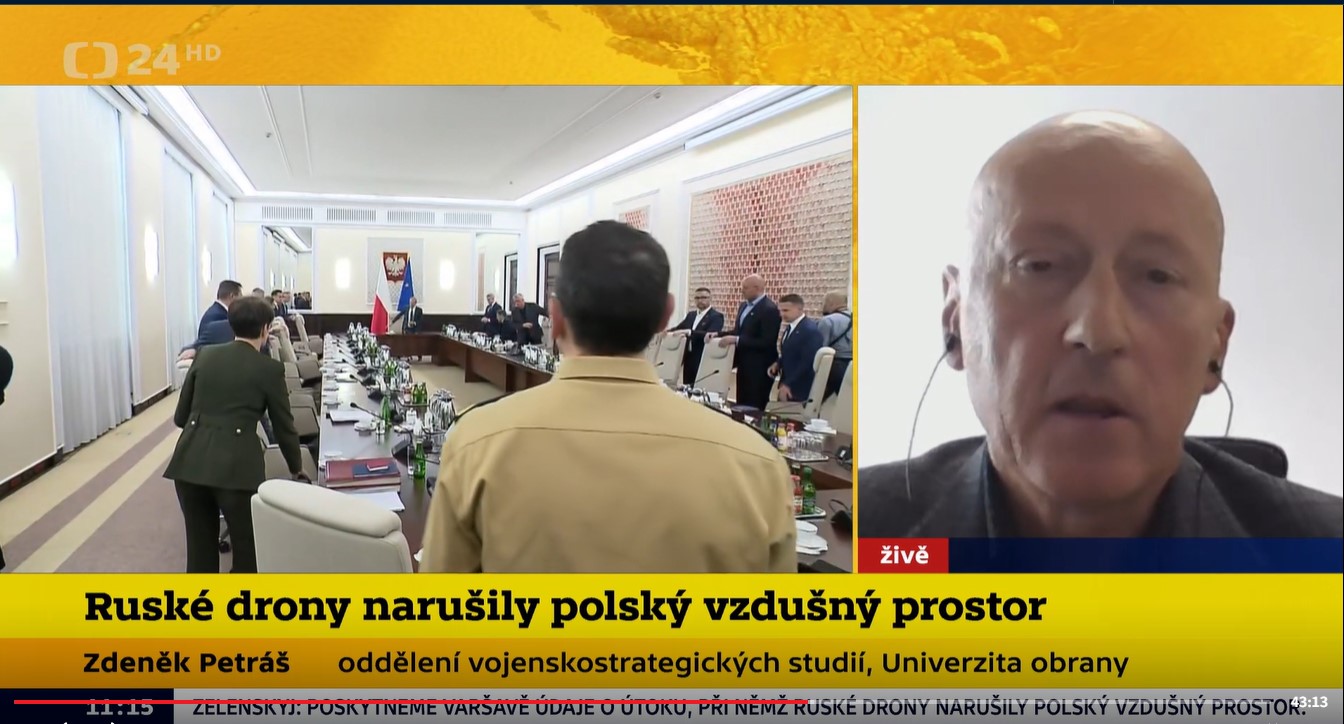
Zdeněk Petráš from the Centre for Security and Military Strategic Studies at the University of Defence spoke to the Czech Radio’s Radiožurnál on 22 October 2026, where he commented on the possibility of procuring weapons and other military materiel for Ukraine through a NATO agency.
NATO will allow Ukraine to make use of its centralised agency for support and the procurement of defence materiel, the NATO Support and Procurement Agency (NSPA). The new mechanism is intended to facilitate Kyiv’s access to weapons, ammunition and other military equipment, while contributing to a faster and more efficient fulfilment of its defence requirements.
Ukraine’s involvement with the NSPA offers an opportunity to benefit from a more flexible acquisition process, specialised expertise and established links with the defence industry. A centralised approach may facilitate the coordination of orders and reduce some of the administrative obstacles associated with procuring military materiel during an ongoing war. However, the key factors will include not only the ability to place orders for weapons, but also the availability of the required equipment, suppliers’ production capacities, funding, and the speed at which the equipment can be delivered to Ukraine.
The decision represents another step towards deepening practical cooperation between Ukraine and NATO structures. At a time when the Ukrainian Armed Forces need to continuously replenish ammunition, equipment and other materiel, a more efficient procurement system may contribute to better planning and more effective use of available resources.
However, access to the NSPA does not mean automatic arms deliveries, nor does it guarantee that all of Ukraine’s requirements will be met in the necessary quantities and within the required timeframe. The outcome will also depend on decisions taken by individual supplier countries, industrial capacity, and the availability of funding. The possibility of using NATO procurement mechanisms is significant not only from a logistical perspective, but also for the further development of relations between Ukraine and NATO. Access to the Alliance’s expertise and industrial capabilities may support a more systematic approach to meeting the country’s defence requirements and strengthen the alignment between Ukraine’s needs and the capabilities of the Western defence industry. The issue of procuring weapons through NATO thus raises a broader question of how military support for Ukraine can be provided sustainably over the long term in the context of the continuing conflict.
You can listen to the full interview in the Radiožurnál broadcast archive, starting at 12:08.
Text by: Zdeněk Petráš, Ph.D., and the CSMSS Editorial Team