Personal experience from the deployment of the Czech contingent at the EUNAVFOR MED IRINI Operational Headquarters in Rome during the first half of 2026
Introduction
The Mediterranean is often perceived as a region of holidays, historical landmarks, and intensive trade. At the same time, it represents one of Europe’s most important geopolitical areas, where security, economic, and migration interests intersect. It is precisely here that the European Union military operation EUNAVFOR MED IRINI operates, with the primary objective of contributing to the stabilisation of Libya and enhancing security in the central Mediterranean.
During the first half of 2026, I served as commander of the Czech contingent at the mission’s Operational Headquarters (OHQ) in Rome. This experience allowed me not only to observe the day-to-day functioning of a multinational military organisation but also to witness a significant transformation of the mission, which may gradually become one of the most important instruments of European defence cooperation.
From the Berlin Conference to Operation IRINI
Operation IRINI’s origins trace back to January 2020, when an international conference dedicated to resolving the protracted conflict in Libya took place in Berlin. A key outcome was the need to ensure more effective enforcement of the United Nations arms embargo on Libya. In response, the European Union decided to launch a new military operation under the Common Security and Defence Policy (CSDP), succeeding Operation Sophia and officially commencing on 31 March 2020.
The name “Irini” is derived from the Greek word for peace. The operation’s primary task became monitoring and enforcing the arms embargo against Libya. Additional responsibilities include monitoring the illegal export of oil, tracking human smuggling networks, supporting capacity-building initiatives for Libyan institutions responsible for coastal security, and, in recent years, enhancing maritime situational awareness in the Mediterranean.
A Turning Point in 2026
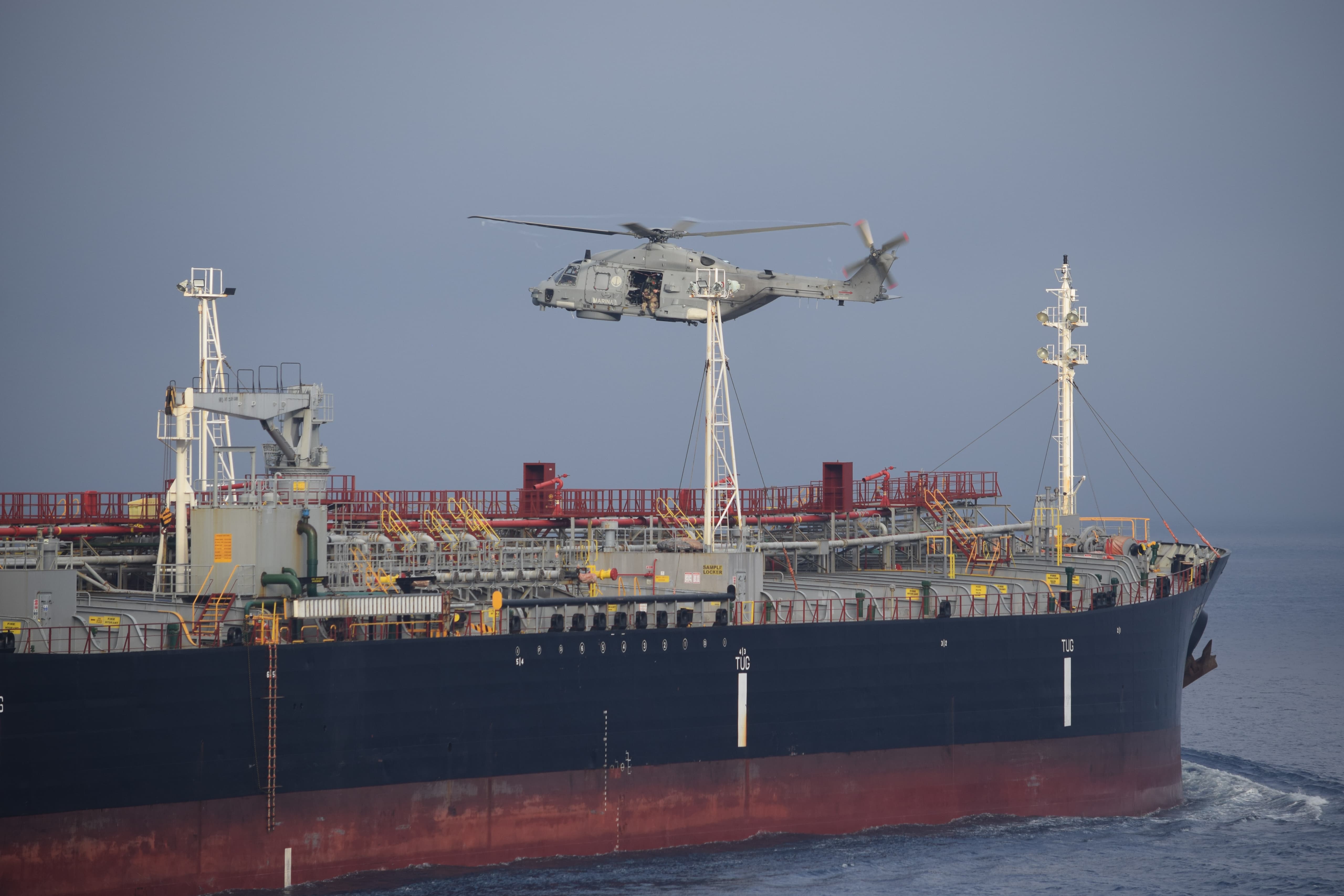
The year 2026 will likely be remembered as one of the most significant periods in the operation’s history. On 25 May 2026, United Nations Security Council Resolution 2292, which had provided the legal framework for inspecting vessels suspected of violating the arms embargo against Libya since 2016, expired. No proposal to extend it was submitted, and the mandate therefore lapsed.
The operation itself, however, did not cease. It continues under the mandate of the European Union and the relevant decisions of EU institutions. In practice, this made IRINI the first EU military operation of its kind whose principal activities are no longer directly based on an active United Nations Security Council mandate.
This development represents a significant milestone not only for the operation but also for the European Union as a whole. It demonstrates the EU’s growing ability to assume responsibility for security in its immediate neighbourhood and to pursue its strategic interests more independently.
How the Operational Headquarters Functions
The Operational Headquarters (OHQ) is located in Rome and serves as the nerve centre of the entire operation. Here, missions are planned, information gathered by maritime and air assets is analysed, future tasks are prepared, and the activities of participating states are coordinated.
At first glance, the headquarters may look like an ordinary office. In reality, it is the setting for intensive international cooperation every day. Alongside maritime specialists, it hosts experts in intelligence, planning, logistics, personnel management, legal affairs, medical support, and strategic communications.
During my deployment, the headquarters was also preparing for new tasks associated with the more active use of the “Right of Visit” mechanism. At the same time, efforts were underway to expand training and capacity-building activities for Libyan security institutions.
These daily activities clearly demonstrated that the future of the operation lies not only in inspections at sea but also in the long-term development of regional stability.
The Czech Republic as an Active Participant
The Czech Republic is among the states contributing to the operation over the long term through officers and specialists assigned to key staff positions.
Czech personnel served in a variety of headquarters roles, helping shape the everyday functioning of the Operational Headquarters and contributing to the management of Operation IRINI.
Czech officers gradually assumed certain responsibilities formerly carried out by Irish colleagues, whose continued participation in the mission was reconsidered after the termination of the UN mandate. This not only increased the workload of Czech personnel but also confirmed their high level of professional competence.
The Czech Republic’s participation is therefore far from symbolic. On the contrary, it reflects active involvement in planning and managing the operation as a whole.
Military Diplomacy in Practice
The deployment of the Czech contingent in Rome also has a less visible dimension. Members of the contingent do not merely form part of an international military operation; they also represent the Czech Republic abroad.
The contingent maintains close relations with the Embassy of the Czech Republic to the Italian Republic and the Embassy of the Czech Republic to the Holy See. Cooperation includes participation in commemorative and social events, support for Czech community activities, and representation of the Czech Republic at important occasions.
A notable example was the contingent’s participation in a wreath-laying ceremony at the memorial plaque of the Czechoslovak legionnaire Jan Čaloun in Rome, followed by a meeting with the Czech expatriate community organised by the Czech Embassy.
These activities illustrate that modern military deployments do not end at the gates of barracks or headquarters. In many cases, they become an important part of the Czech Republic’s international representation and help strengthen its diplomatic relations.
Nepomucenum and the Czech Presence in Rome
An important aspect of the contingent’s stay was its cooperation with the Pontifical College Nepomucenum, one of the most significant Czech institutions in Rome, whose tradition dates back to the First Czechoslovak Republic.
The students repeatedly demonstrated an exceptional willingness to introduce Czech soldiers to the city’s history, cultural heritage, and places associated with Czech history. Thanks to their knowledge, they experienced Rome in a way an ordinary visitor would rarely discover.
This cooperation created a unique connection between the military environment, diplomacy, education, and cultural tradition. At the same time, it reminded us that foreign deployments are not solely about fulfilling operational tasks; they are also opportunities to broaden knowledge and build interpersonal relationships.
One memorable example was preparing our contingent’s farewell gathering with colleagues from OHQ, during which a nun from the institute served as chief instructor in baking traditional pastries and guided us through the entire process with remarkable determination.
IRINI as a Laboratory of European Defence
From the perspective of the Operational Headquarters, the true significance of Operation IRINI extends far beyond Libya and the arms embargo.
Today, the mission represents a unique environment in which European Union member states test their ability to jointly plan, command, and execute military operations on a daily basis. Officers from different countries work according to common procedures, share experience, and address challenges together at the strategic, operational, and tactical levels.
Here, valuable experience is gained to support the future development of European defence capabilities. The operation contributes to harmonising procedures, building trust among member states, and creating professional networks that may be used in future European security initiatives.
IRINI can therefore be viewed not only as a crisis-management instrument but also as a foundational building block of the emerging European defence architecture. While formally focused on the maritime domain, its contribution extends across a much broader spectrum of military capabilities, from planning and command to intelligence, logistics, and international cooperation.
Conclusion
Operation EUNAVFOR MED IRINI was established in response to the security challenges associated with the conflict in Libya. After six years, however, it has become much more than a mission dedicated to enforcing an arms embargo.
The year 2026 showed that the European Union is prepared to assume greater responsibility for its own security and continue the operation even after the relevant United Nations Security Council mandate expires. At the same time, the mission has proven to be a unique platform for developing European defence capabilities, strengthening international cooperation, and gaining practical experience in a multinational environment.
For the Czech Republic, participation in the operation represents not only a contribution to international security but also an opportunity to help shape the future of European defence, strengthen relationships with allies, and represent the country with distinction abroad. In this sense, IRINI is not merely an operation but also an investment in the future of European security.
Author: Colonel Vladimír Vyklický, Ph.D.